Mouth And Throat Exercises For Sleep Apnea

FacialMuscles2The most effective treatment for obstructive sleep apnea (OSA) is a continuous positive airway pressure (CPAP) machine. It maintains blood oxygen levels by keeping airways open via pressure. Airways narrow when muscles relax naturally during sleep, which may lead to pauses in breathing in some people.

CPAP virtually eliminates episodes of apnea (cessation of breathing) and hypopnea (low or shallow breathing) as well as associated snoring. As a result, sleep quality improves and daytime sleepiness is significantly lessened, even after just one use.

There are alternatives to CPAP however. One is mouth and throat exercises. The following study found that oropharyngeal exercises significantly reduced the severity of sleep apnea, leading to improved sleep quality and reductions in snoring and daytime sleepiness:

Effects of Oropharyngeal Exercises on Patients with Moderate Obstructive Sleep Apnea Syndrome, American Journal of Respiratory and Critical Care Medicine, 2009

Thirty one patients were assigned to either sham therapy (deep breathing and nasal lavage) or treatment (throat exercises).

After 3 months, those in the treatment group had a significant decrease in:

  • Neck circumference (39.6 vs. 38.5 cm)
  • Snoring frequency
  • Snoring intensity
  • Daytime sleepiness
  • Sleep quality score (a decrease in this score indicated improvement)
  • Obstructive sleep apnea severity measured by an apnea-hypopnea index (AHI)

The authors made this comparison:

“The reduction in the AHI observed in patients with moderate OSAS was remarkable and in the same order of magnitude as that previously reported by a review of randomized studies that used a mandibular advancement appliance for OSAS.”

Study subjects performed the exercises throughout the day for about 30 minutes total. Here’s a summary of the exercises from the study:

Soft Palate

  • Pronounce an oral vowel intermittently (isotonic exercise) and continuously (isometric exercise). Repeat daily for 3 minutes.

Tongue

  • Brush the top and sides of the tongue while the tongue is sitting on the floor of the mouth. Five times each movement, 3 times a day.
  • Place the tip of the tongue against the front of the palate (against back of upper front teeth) and slide the tongue backward. A total of 3 min throughout the day.
  • Forced tongue sucking upward against the palate, pressing the entire tongue against the palate. A total of 3 min throughout the day.
  • Force the back of the tongue against the floor of the mouth while keeping the tip of the tongue in contact with the inferior incisive teeth (back of lower front teeth). A total of 3 min throughout the day.

Facial

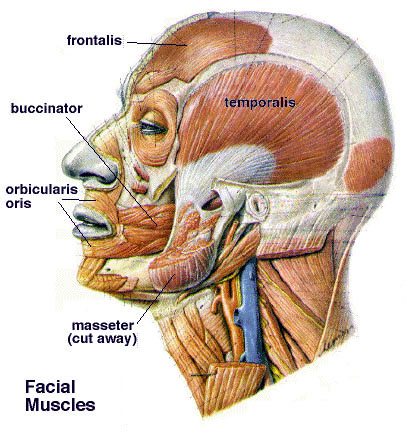
  • Orbicularis oris muscle pressure with mouth closed. (This may mean pursing your lips, but your interpretation is welcome.)
  • Suction movements.
  • Recruitment of the buccinator muscle (cheek muscle) against the finger that is introduced in the oral cavity, pressing the buccinator muscle outward. (I think this means placing a finger in your mouth and pushing your cheek outwards. It’s shown in the video below.)
  • Breathing and Speech: Forced nasal inspiration and oral expiration in conjunction with phonation of open vowels, while sitting. (Breathe in through nose and out through mouth while pronouncing the vowels.)
  • Swallowing and Chewing: Alternate bilateral chewing and deglutition (swallowing), using the tongue in the palate, closed teeth, without perioral contraction, whenever feeding. Use this chewing and swallowing form whenever eating.

The article was accompanied by this short video which demonstrates some of the exercises:
5 Days Of Reduced Activity Increases Diabetes Risk

Walking23

Researchers at the University of Missouri found that reducing daily physical activity for just 5 days led to decreases in insulin sensitivity and higher postprandial glucose in young, healthy men. A return to exercise for 1 day did not reverse this trend:

Acute Inactivity Impairs Glycemic Control but Not Blood Flow to Glucose Ingestion, Medicine and Science in Sports and Exercise, September 2014

Results: Insulin sensitivity was decreased by [5 days of reduced activity (RA5)]. Likewise, free living [glycemic control (GC)] measures of peak post prandial blood glucose was significantly increased at RA5. Interestingly, insulin sensitivity and GC as assessed by peak PPG were not restored after [return to activity for 1 day].

Conclusions: Thus, acute reductions in physical activity impaired GC and insulin sensitivity; however blood flow responses to an OGTT were not affected. Further, a 1 day return to activity was not sufficient to normalize GC following 5 days of reduced daily physical activity.

Co-author Paul Fadel said:

The impairment we saw in just five days was quite striking. It shows just how susceptible the vascular system is to physical inactivity.

Co-author John Thyfault:

We need to teach and explain to people about the physiology of their bodies and the physiology of the disease process and help them understand that inactivity plays a foundational role in the disease process. Then we give them behavioral tools, like pedometers, to monitor and help them achieve higher physical activity so they start to see and feel health improvements. These studies are proof we need to get people to understand their activity every day plays a role in their health, and that their health is not simply a matter of body weight and how they look in the mirror.

November Is National Diabetes Month

November2014

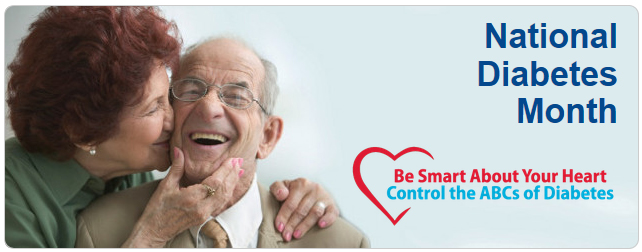
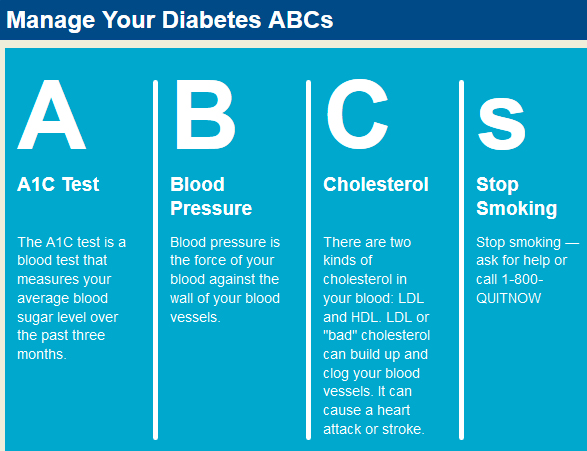
This November, the National Diabetes Education Program (NDEP) will be promoting “Be Smart About Your Heart: Control the ABCs of Diabetes” to help people with diabetes learn they are at greater risk for heart disease, and also how they can lower that risk by managing the diabetes ABCs:

  • A1C test
  • Blood Pressure
  • Cholesterol
  • Stop Smoking

ABCsOfDiabetes2014

The NDEP has more information about what your goals should be, what questions to ask your doctors, and tips and resources to help you manage your diabetes.

Working Long Hours May Increase Risk For Diabetes

WorkingLongHoursA new review has found that working long hours, greater than 55 hours a week, may increase the risk for type 2 diabetes:

Long working hours, socioeconomic status, and the risk of incident type 2 diabetes: a meta-analysis of published and unpublished data from 222 120 individuals, The Lancet Diabetes & Endocrinology, 25 September 2014

The link was only apparent in people of lower socioeconomic status.

“Individuals who worked 55 hours or more per week had an almost 30% increased risk of developing diabetes than did those who worked 35—40 hours per week. This association was robust to adjustments for age, sex, BMI, and lifestyle factors, such as leisure-time physical activity, smoking, and alcohol consumption. It also remained after shift workers were excluded from the analysis.”

The authors give these possible reasons for an increased risk:

  • Working long hours might be a marker of other risk factors such as low pay, financial constraints, and personal hardships.
  • Working long hours might displace other health-restorative behaviors, particularly sleep, time to rest, and time to engage in physical activity and social interactions.
  • Working long hours may have a deleterious effect on personal growth, fulfillment, and happiness. This link, they say, may be tenuous since you should see it in workers of high socioeconomic status too.

Working fewer hours may not be an option. The lead author, Mika Kivimäki, a professor of epidemiology at University College London, said:

My recommendation for people who wish to decrease the risk of Type 2 diabetes applies both to individuals who work long hours and those who work standard hours: Eat and drink healthfully, exercise, avoid overweight, keep blood glucose and lipid levels within the normal range, and do not smoke.

What Level Of Fasting Blood Glucose Indicates Prediabetes?

What is prediabetes? The NIH defines it as:

Prediabetes is when blood glucose levels are higher than normal but not high enough for a diagnosis of diabetes. Prediabetes means a person is at increased risk for developing type 2 diabetes, as well as for heart disease and stroke. Many people with prediabetes develop type 2 diabetes within 10 years.

However, modest weight loss and moderate physical activity can help people with prediabetes delay or prevent type 2 diabetes.

[yop_poll id=”2″]

FDA Approves Inhaled Insulin By Mannkind

Afrezza2
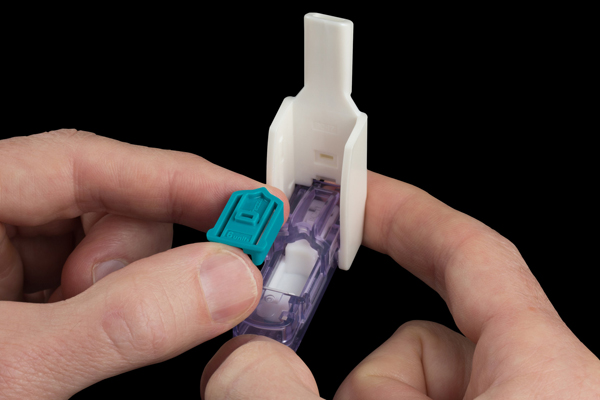
Afrezza comes in single-use cartridges. An earlier inhaled insulin, Exubera, was not a sales success and was withdrawn. Source: New York Times.

Last week the FDA approved Afrezza, a rapid-acting inhaled insulin that is meant to be taken at the beginning of each meal. It is not a substitute for long-acting insulin:

FDA Approves Afrezza To Treat Diabetes, FDA Press Release, 27 June 2014

It was approved for use in type 1 or type 2 diabetes. It is not recommended for people who smoke or who recently smoked, and comes with a Boxed Warning:

“Afrezza has a Boxed Warning advising that acute bronchospasm has been observed in patients with asthma and chronic obstructive pulmonary disease (COPD). Afrezza should not be used in patients with chronic lung disease, such as asthma or COPD because of this risk.”

The FDA noted that:

“Afrezza provided less HbA1c reduction than insulin aspart [a fast-acting injected insulin], and the difference was statistically significant.”

It’s not available in pharmacies yet but according to the manufacturer will be soon. You can register on Afrezza’s site to be notified of availability.

JNC 8: New Blood Pressure Guidelines, 2014

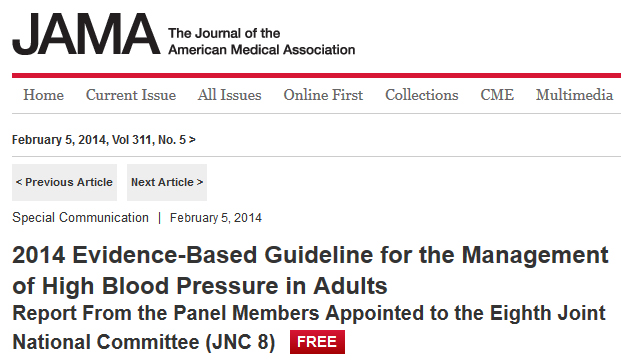
The Eighth Joint National Committee (JNC 8) released new guidelines for managing high blood pressure at the beginning of the year:

BloodPressureGuidelines2014

The guidelines included 9 evidence-based recommendations and a flow chart to assist physicians in their treatment of patients. I’ve excerpted the levels to initiate treatment below and highlighted the treatment cut-off for people with diabetes (140/90):

Recommendation 1: In the general population aged ≥60 years, initiate pharmacologic treatment to lower blood pressure (BP) at systolic blood pressure (SBP) ≥150 mm Hg or diastolic blood pressure (DBP) ≥90 mm Hg.
Recommendation 2: In the general population <60 years, initiate pharmacologic treatment to lower BP at DBP ≥90 mm Hg. Recommendation 3: In the general population <60 years, initiate pharmacologic treatment to lower BP at SBP ≥140 mm Hg. Recommendation 4: In the population aged ≥18 years with chronic kidney disease (CKD), initiate pharmacologic treatment to lower BP at SBP ≥140 mm Hg or DBP ≥90 mm Hg.
Recommendation 5: In the population aged ≥18 years with diabetes, initiate pharmacologic treatment to lower BP at SBP ≥140 mm Hg or DBP ≥90 mm Hg.
Recommendation 9: The main objective of hypertension treatment is to attain and maintain goal BP. If goal BP is not reached within a month of treatment, increase the dose of the initial drug or add a second drug from one of the classes in recommendation 6 (thiazide-type diuretic, CCB, ACEI, or ARB). The clinician should continue to assess BP and adjust the treatment regimen until goal BP is reached. If goal BP cannot be reached with 2 drugs, add and titrate a third drug from the list provided. Do not use an ACEI and an ARB together in the same patient.

The panel also said:

“For all persons with hypertension, the potential benefits of a healthy diet, weight control, and regular exercise cannot be overemphasized. These lifestyle treatments have the potential to improve BP control and even reduce medication needs.”

Too Much Animal Protein Linked To Higher Diabetes Risk

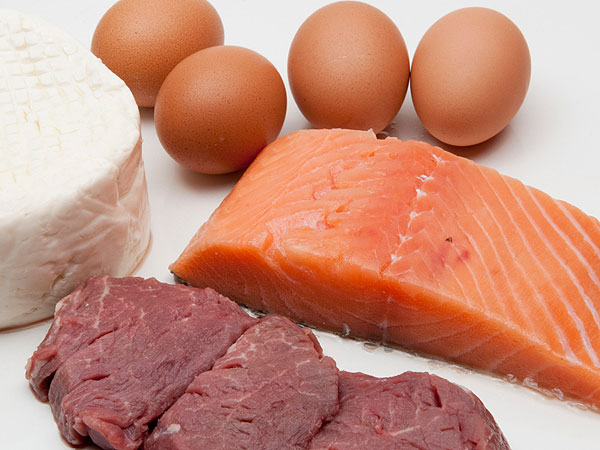
HighProteinFoodsDiets high in animal protein, including meat, eggs, seafood, cheese, yogurt and other dairy products, were associated with an elevated risk for type 2 diabetes. That was the finding of this study:

Dietary Protein Intake and Incidence of Type 2 Diabetes in Europe: The EPIC-INTERACT Case-Cohort Study, Diabetes Care, 10 April 2014

Dr. Frank Hu, from the Harvard School of Public Health in Boston (not involved with the study) said:

“Several previous studies have found that higher intake of total protein, especially animal protein, are associated with long-term risk of developing diabetes.”

For this study, researchers examined data from the European Prospective Investigation into Cancer and Nutrition (EPIC)-InterAct case-cohort study, a large previous study of adults in eight European countries. There was a 12-year follow-up.

It found:

“Type 2 diabetes was higher in those with high intake of total protein and animal protein. Plant protein intake was not associated with type 2 diabetes.”

After adjusting for other risk factors, there was a 13% higher incidence of diabetes for every 10 gram increment of protein.