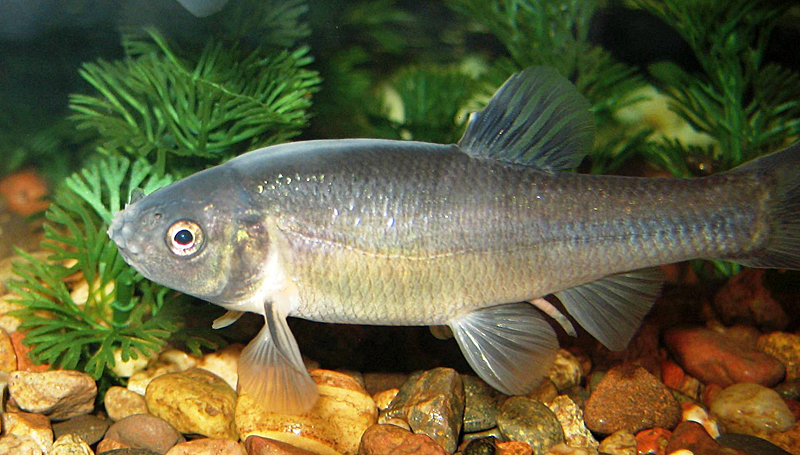
A new study from the University of Wisconsin-Milwaukee found that the diabetes drug metformin affects the reproductive organs of male minnows who are exposed to the drug from wastewater discharge:
Article: Exposure To Widespread Diabetes Drug Feminizes Male Fish, Environmental Health News, 28 April 2015
Study: Emerging Wastewater Contaminant Metformin Causes Intersex And Reduced Fecundity In Fish, Chemosphere, September 2015
Researchers exposed fathead minnows to water containing levels of the diabetes drug metformin commonly found in wastewater effluent. Wastewater effluent is the final product discharged from a wastewater treatment plant into a stream, river, or other waterway. They found that a majority of exposed male fish were feminized:
“Eighty-four percent of 31 metformin-exposed male fish exhibited feminized reproductive organs.
In addition to the feminization, exposed male minnows weighed less and had significantly less babies when they reproduced, suggesting that the feminization may impact their ability to reproduce properly.”
The use of metformin is growing, as is its appearance in the environment:
Increased illnesses means more drugs. Pharmaceutical drugs get into our wastewater when people flush their medication or, more commonly, when they excrete them. Metformin, unlike many pharmaceutical drugs, is not metabolized by the human body, and gets excreted unchanged. … Researchers estimate that, by mass, metformin is among the most common pharmaceutical in wastewater.
The study’s authors described metformin as “a nontraditional endocrine disrupting chemical.” It does not appear on the EPA’s Drinking Water Contaminant Candidate List, published in February of this year, but, they say, probably should.